 Tastiana
How to translate your restaurant menu for international guests
How to translate a restaurant menu into English without losing what makes your dishes special: what to translate, what to keep and how to check it.

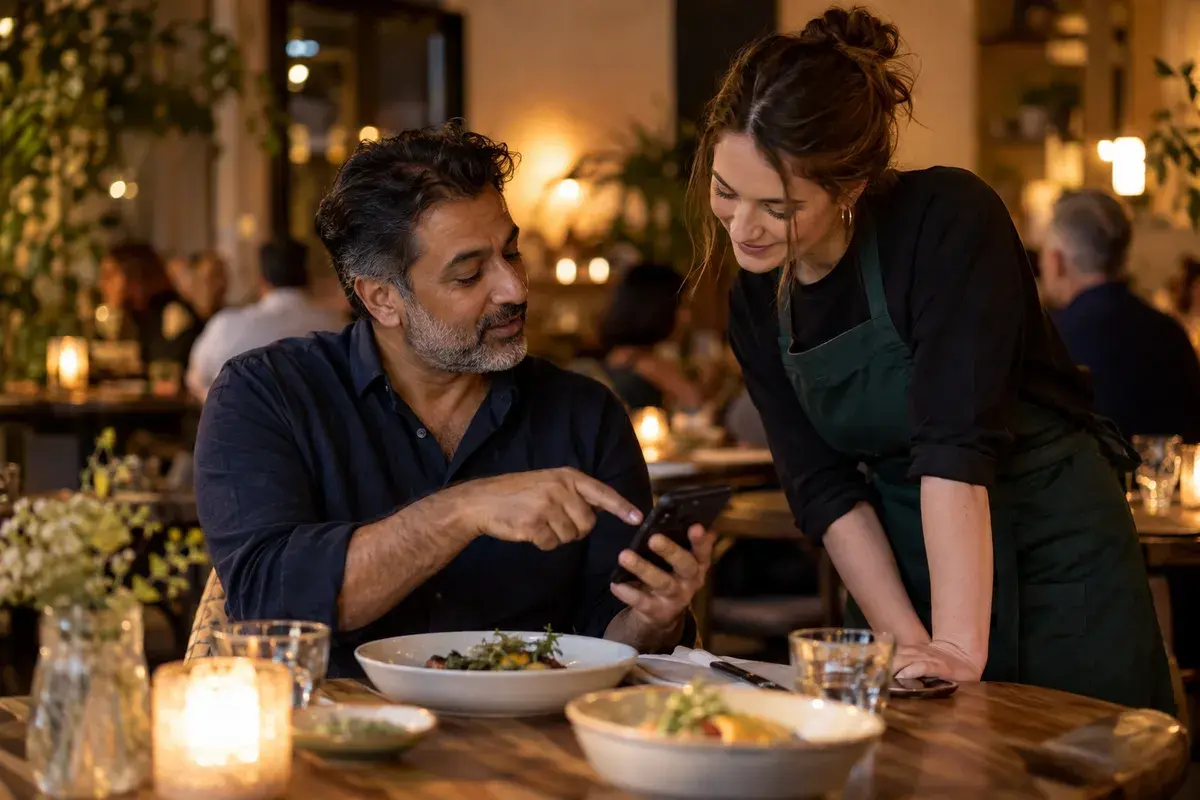
A couple on holiday sit down at your terrace, look at the menu and take out a phone. They point the camera at the page, and a translation app turns your signature dish into something that makes them laugh, or worse, frown. They are not being rude. They simply want to understand what they are about to order, and if you do not give them a translation, they will make their own.
A good menu translation is one of the kindest things you can do for international guests, and one of the easiest ways to win them over. Here is how to do it well.
Your guests are translating your menu anyway
People search for "translate menu" and "Google Translate menu" every month, and many more simply open the camera translation on their phone without searching at all. The results depend on the light, the font, the layout and the translation app. Handwritten specials, decorative fonts and two-column PDFs come out worst. Local dish names, which are often the most interesting part of your menu, are frequently translated word for word into something that makes no sense.
Giving guests an English menu takes that guesswork away. It also means you, not an app, decide how your dishes are described.
What to translate, and what to keep
Keep dish names that are part of your identity
If a dish has a local name guests should learn, keep it, and add a short English explanation underneath. "Pulpo a la gallega" becomes memorable with "Galician-style octopus, potatoes, smoked paprika, olive oil" below it; "Octopus" alone tells a guest very little. The same goes for "pintxos", "smørrebrød" or "pho".
Translate what helps guests choose
Ingredients, cooking methods and descriptions should be translated in full, in plain words. Many of your international guests are not native English speakers either, so "grilled", "slow-cooked" and "pickled" serve them better than rare culinary terms.
Never change the facts
Prices, portion sizes, the order of dishes and the dietary labels must stay exactly as they are in your original menu. A translated menu that lists a different price or drops a "contains nuts" label creates real problems at the table.
Common translation traps
- Word-for-word translations. Idioms and dish names often mean something different, or nothing at all, when translated literally.
- False friends. Words that look familiar but mean different things to different guests. An "entrée" is a starter in France and much of Europe, but a main course in the United States.
- Inconsistent terms. The same ingredient called three different things on three pages makes guests think they are three different things.
- Allergen names. Translate allergens with their official English names: "celery", "mustard", "molluscs", "sulphites". Our guide to allergen information on your menu lists all 14.
- Missing context. A guest who has never eaten a dish needs a hint of what it is: a soup, a pastry, a dumpling.
Which English?
British and American English name many ingredients differently. Pick the one that suits most of your guests and use it consistently. Where a word really matters, you can add the other in brackets.
| British English | American English |
|---|---|
| Courgette | Zucchini |
| Aubergine | Eggplant |
| Coriander (leaves) | Cilantro |
| Rocket | Arugula |
| Prawns | Shrimp |
| Chips | Fries |
| Crisps | Chips |
| Mince | Ground meat |
| Starter | Appetizer |
Machine translation: a good start, not the final word
Modern translation tools, including AI, handle menus far better than they used to, and they are a perfectly good way to produce a first draft. Before guests see it, check four things:
- Names and specialities. Did the tool keep the dish names you want to keep, and explain them well?
- Numbers. Are all prices, sizes and quantities identical to the original?
- Labels and allergens. Is every dietary label and allergen still there, correctly named?
- Tone. Does it sound like your restaurant, warm and appetising, not like a technical manual?
If you can, ask a fluent speaker to read it: a member of staff, a regular guest from abroad or a friend. Ten minutes of reading catches most mistakes.
Translating drinks and wine lists
Drinks need a lighter touch than food. Keep the names of producers, wines, beers and spirits exactly as they are: a guest looking for a particular Rioja or a local craft beer will search for its real name. Translate the descriptions instead, such as the style, the grape, the taste and what it goes with. Glass and bottle sizes should stay in the units you serve, so "12 cl" and "75 cl" do not become ounces on one page and stay centilitres on another.
Which languages to offer
English reaches the widest range of visitors, so it is the natural first translation. Beyond that, translate for the guests you actually have. Your booking system, your reviews and the questions your staff hear at the table usually show which languages come up most. A second or third language is worth adding when a clear share of your guests speaks it, and only if you can keep it as up to date as your English menu.
Keep the translation in sync
The most common problem with translated menus is not a bad translation. It is an old one: the English menu still shows last season's dishes and prices, because nobody remembered to update it when the original changed. Treat your original menu as the single source, and update the translation every time the menu changes, in the same sitting.
Where to offer your translated menu
- On your website, next to the original, with an obvious way to switch language.
- Behind the QR code on your tables, so visitors get it the moment they sit down. See our guide to QR code menus guests actually like.
- In your Google Business Profile, where many visitors look for restaurants nearby.
- A few printed copies at the host stand for guests without a phone at hand.
How Tastiana translates your menu
Tastiana translates your menu into English with AI, keeping every price, the order of the dishes and every dietary label exactly as they are in your original. You read and approve the translation before guests see it, and when your menu changes, only the new or changed text needs a fresh translation. If your website already has the menu in more than one language, guests can choose between those too, and the guide's own buttons and headings are ready in seven languages. Try the demo in English.
Questions restaurants ask
Should we translate dish names?
Keep local dish names that are part of your identity, and add a short English explanation underneath. Translate descriptions and ingredients in plain words.
Is Google Translate good enough for a menu?
Translation tools give a useful first draft, but check names, prices, dietary labels and tone before guests see it, ideally with a fluent speaker.
British or American English on a menu?
Choose the one most of your guests use and stay consistent. Where a word matters, such as courgette and zucchini, you can add the other in brackets.
How do we keep a translated menu up to date?
Treat the original menu as the single source, and update the translation every time the menu changes, in the same sitting.